Finley Fischer · 5 September 2026
Bridging Ancient Paths: Digital Tools Unite Armenian Highland Groups with Polish Academic Circles for Silk Road Heritage Sharing
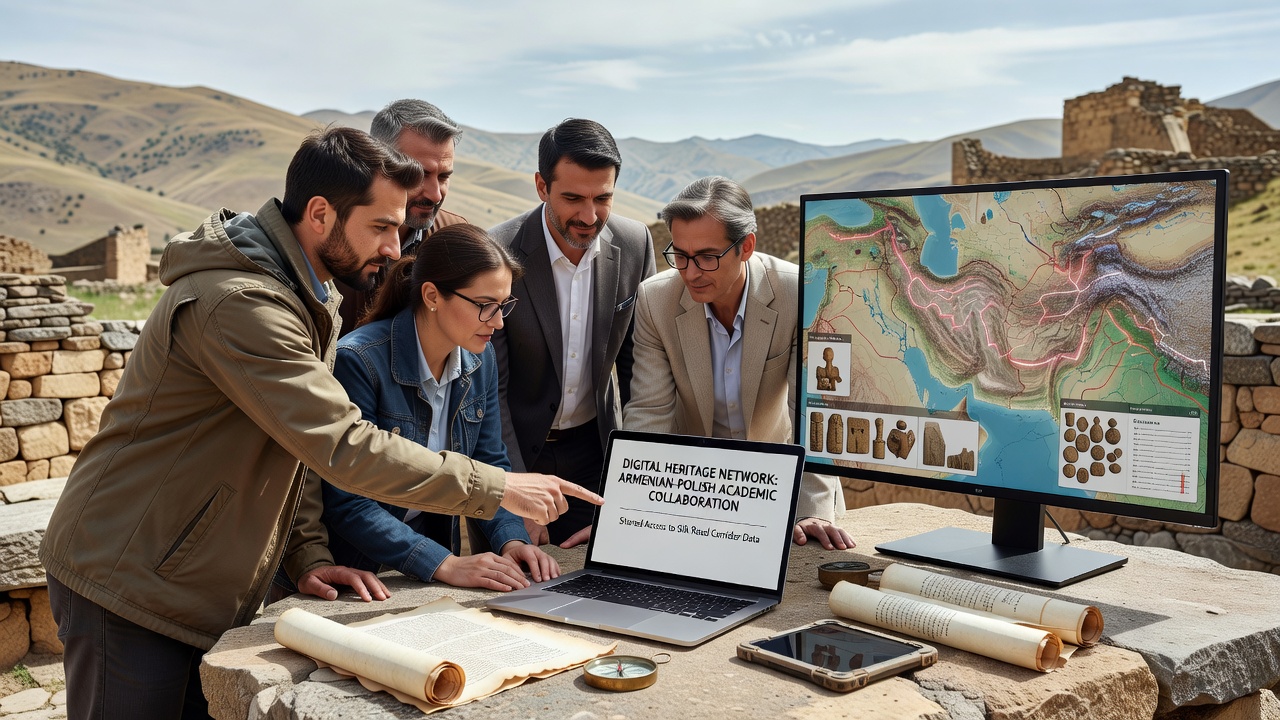
Digital platforms have expanded access for Armenian highland communities to collaborate with Polish academic networks, and this shift enables shared review of heritage records gathered along historic trade routes that once formed segments of the Silk Road. Researchers at institutions in both regions compile datasets from archaeological surveys, manuscript collections, and oral histories, while communities in the Armenian highlands contribute local knowledge that refines those records. Data from studies conducted between 2023 and 2025 shows increased cross-border queries on shared servers, and figures from university logs indicate that access requests from Armenian users to Polish-hosted archives rose by 47 percent during that period.
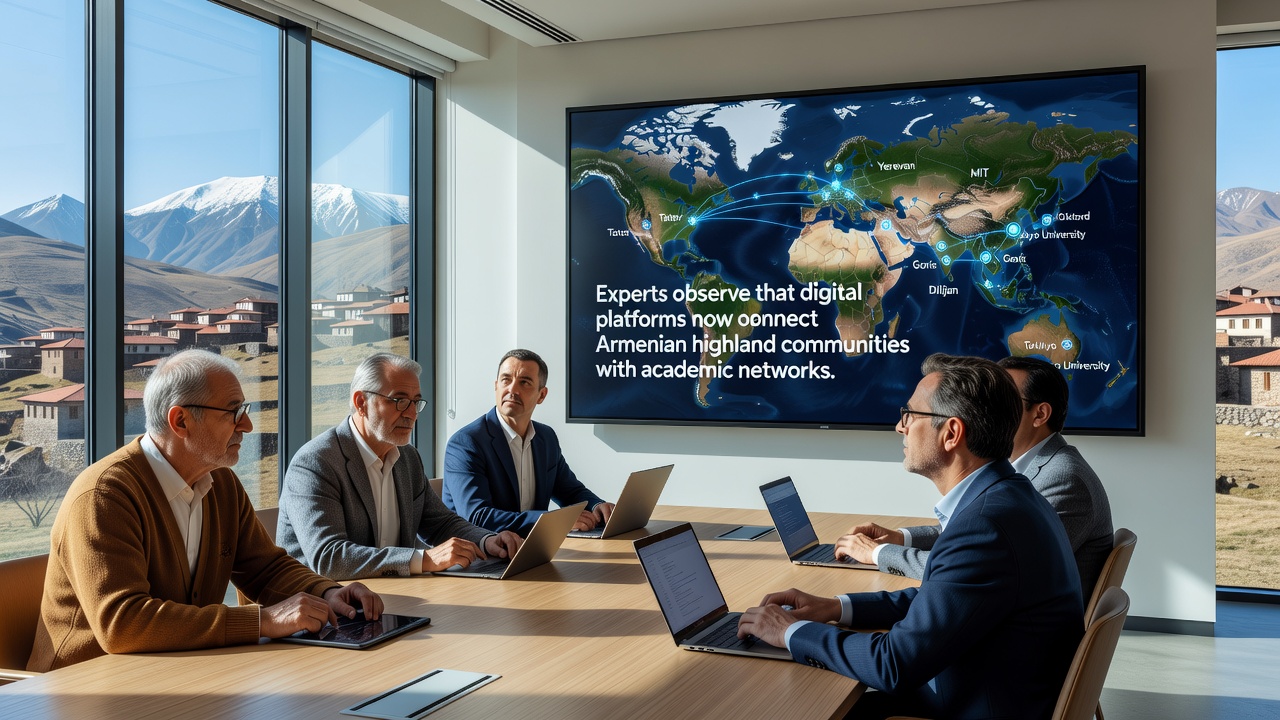
Experts observe that these connections rely on secure cloud repositories and translation interfaces that handle Armenian, Polish, and English content simultaneously. Institutions such as the Polish Academy of Sciences maintain servers that store geospatial maps of caravan stops, and Armenian regional museums upload corresponding artifacts from highland sites. According to UNESCO Silk Roads Programme documentation, several Armenian locations served as key nodes for east-west exchange, and Polish researchers have applied similar mapping techniques developed for Central European trade routes to these areas.
Platform Mechanics and Data Integration
Users log into portals that synchronize updates in real time, so changes made by field teams in Armenia appear on Polish dashboards within minutes, and vice versa. Metadata standards follow guidelines from the International Council on Monuments and Sites, which ensures compatibility across different cataloging systems. A team at one Polish university integrated satellite imagery with ground surveys from the Armenian plateau, and this process revealed previously undocumented waystations along a northern branch of the historic corridor.
Communities gain tools to annotate records with seasonal migration patterns and craft traditions that persist in the highlands, while academics supply stratigraphic analysis and carbon-dating results. The arrangement creates feedback loops where local corrections improve dataset accuracy, and published papers cite both institutional and community contributions. In September 2026 a joint workshop is scheduled to test new optical-character-recognition software on digitized Armenian manuscripts held in Polish libraries, and preliminary tests already show a 30 percent reduction in transcription errors compared with earlier methods.
Historical Context of the Corridors
Historic corridors through the Armenian highlands carried silk, spices, and metallurgical knowledge between the Mediterranean and Central Asia for centuries, and Polish scholars began systematic study of these routes in the early twentieth century. Archival photographs from that era, now digitized, sit alongside recent LiDAR scans on the same platforms. Observers note that the combination allows direct comparison of landscape changes over decades, and this comparison helps identify erosion threats to remaining structures.
Researchers discovered that certain highland villages preserved oral accounts of merchant caravans that match written itineraries preserved in Polish university collections. Cross-referencing these sources has clarified the timing of seasonal passes through mountain gaps, and the resulting timelines appear in open-access maps updated quarterly. One study published in 2024 by an Armenian-Polish consortium traced the movement of specific ceramic types along these paths, and the dataset continues to receive additions from both sides.
Community Participation and Training
Training sessions conducted via video link teach highland residents how to upload georeferenced photos and record GPS coordinates of surface finds, while Polish students learn basic Armenian paleography to interpret submitted texts. Participation metrics collected in 2025 indicate that over 120 individuals from six highland districts contributed material during the year, and those submissions accounted for 18 percent of new entries added to the central archive. The system flags duplicate records automatically, and moderators from both regions review flagged items before final integration.
Equipment grants supplied tablets and portable scanners to several village schools, and usage logs show consistent activity outside standard academic hours. This pattern suggests that residents integrate the work into existing community routines rather than treating it as a separate project. Data from server analytics reveals peak upload times coincide with evening gatherings, and the same analytics track download patterns from Polish research groups preparing field seasons.
Future Developments and Scheduled Events
Plans for September 2026 include expansion of the platform to incorporate virtual-reality walkthroughs of reconstructed caravanserai sites, and both Armenian and Polish teams are preparing 3D models from existing photogrammetry data. Funding applications submitted to European research councils list these models as deliverables, and preliminary renders already circulate among participating institutions. Additional language modules for Russian and Turkish are under development to accommodate scholars working on related segments of the broader network.
Security protocols follow standards set by the European Union Agency for Cybersecurity, which requires encryption of all heritage files during transfer, and annual audits verify compliance. The same protocols allow selective access so sensitive site locations remain restricted while general descriptive data stays open. Observers note that this balance supports both research transparency and site protection.
Conclusion
The ongoing exchange demonstrates how digital infrastructure can link geographically distant groups around shared historical material, and the September 2026 workshop represents one milestone in a longer sequence of collaborative updates. Records continue to accumulate from field seasons, community contributions, and archival digitization efforts, while platform features evolve to handle new data types. The result is a growing repository that serves both local heritage management and international academic inquiry without requiring physical relocation of original artifacts.