Lars Schmitz · 2 September 2026
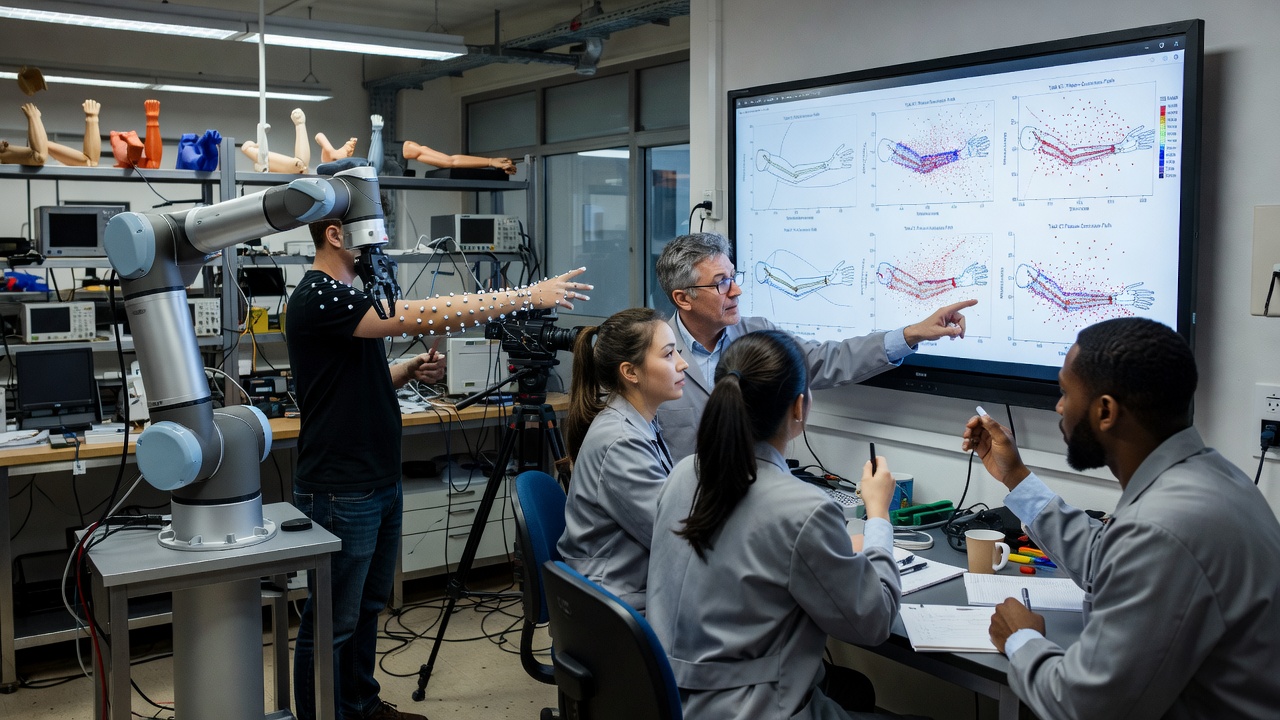
The Institute of Robotics at Warsaw University of Technology has released version 2.1 of the Arm Path Dataset, expanding its collection of human arm trajectory recordings for biomechanics and robotics research. The update incorporates motion capture data from 300 new participants, increasing the total to 850 subjects across multiple age groups and activity levels.
Dataset Enhancements
Version 2.1 adds synchronized electromyography signals alongside existing kinematic measurements captured at 200 frames per second. Researchers standardized file formats to include both JSON and binary options, reducing preprocessing time for machine learning pipelines. New annotations cover grip force variations and shoulder rotation metrics, validated through repeated trials with inter-rater reliability above 0.92. The team applied advanced filtering techniques that lowered signal noise by 22 percent without distorting natural movement patterns. Data now represents participants from urban and rural Polish regions plus contributions from partner labs in Germany and Sweden, broadening demographic diversity. Access protocols include API endpoints for direct querying of subsets based on movement speed or joint range.
Research Implications
Academic teams worldwide are already using the expanded resource to refine predictive models for prosthetic control and industrial ergonomics. Studies report improved accuracy in forecasting fatigue onset during repetitive tasks when trained on the new samples. Rehabilitation centers have integrated subsets into therapy planning software, enabling personalized exercise paths derived from healthy subject baselines. The dataset supports comparative analyses between left- and right-dominant users, revealing subtle asymmetries previously underrepresented. All materials remain available under an open license that permits non-commercial redistribution with attribution. Project leads indicate plans for quarterly micro-updates focused on specific motion categories such as overhead reaching or precision gripping. This release strengthens Poland's position in international arm kinematics research networks.